Setup and installation of 'Open Notebook - The AI Podcast creator' on GCP
This section describes how to provision and connect to ‘Open Notebook - The AI Podcast creator’ VM solution on GCP.
-
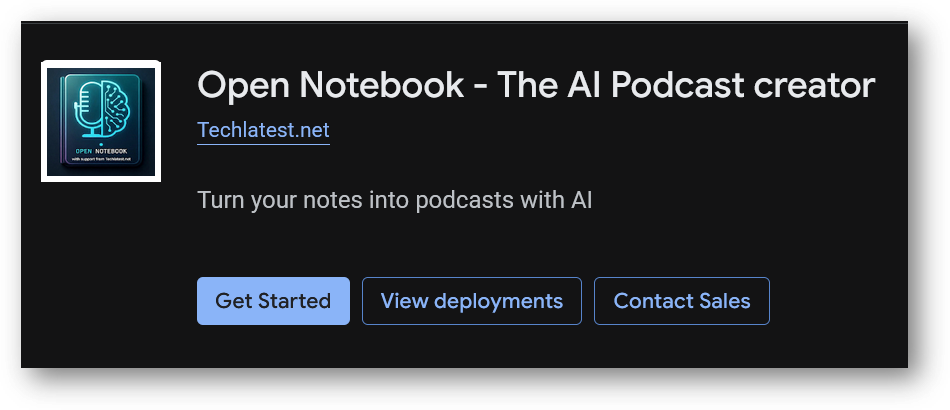
Open Open Notebook - The AI Podcast creator listing on GCP Marketplace.
-
Click Get Started.
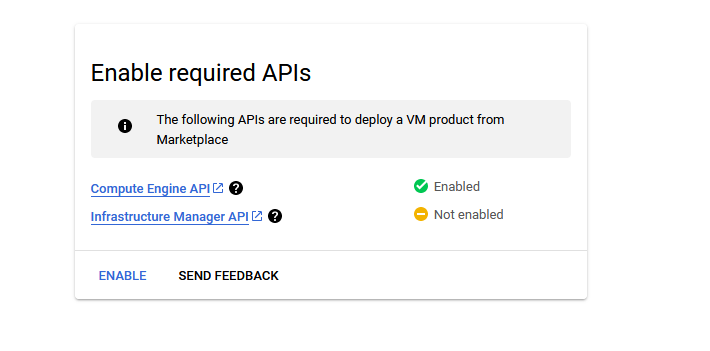
It will ask you to enable the API’s if they are not enabled already for your account. Please click on enable as shown in the screenshot.
-
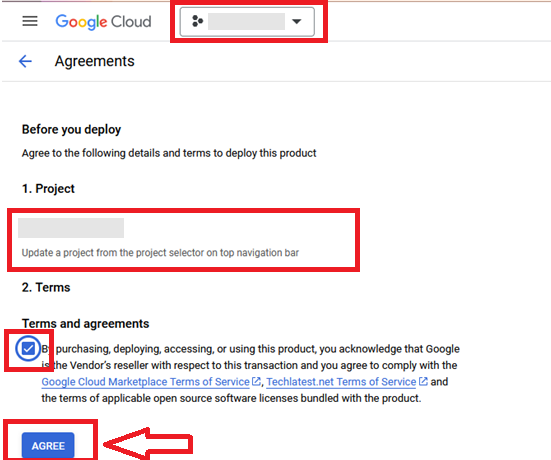
It will take you to the agreement page. On this page, you can change the project from the project selector on top navigator bar as shown in the below screenshot.
-
Accept the Terms and agreements by ticking the checkbox and clicking on the AGREE button.
-
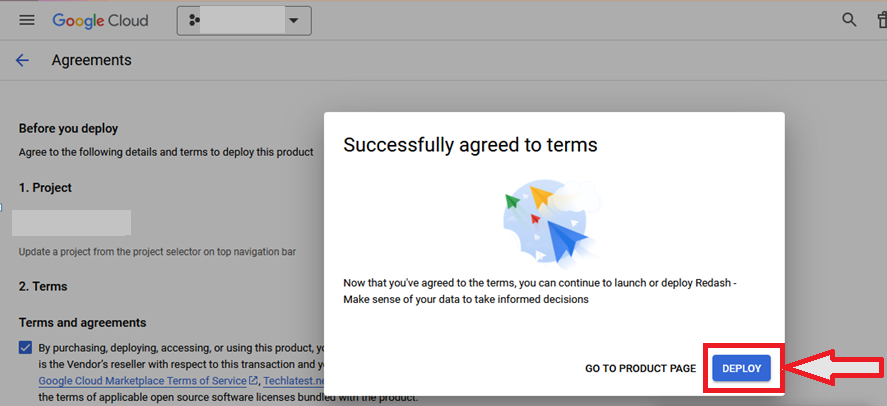
It will show you the successfully agreed popup page. Click on Deploy.
-
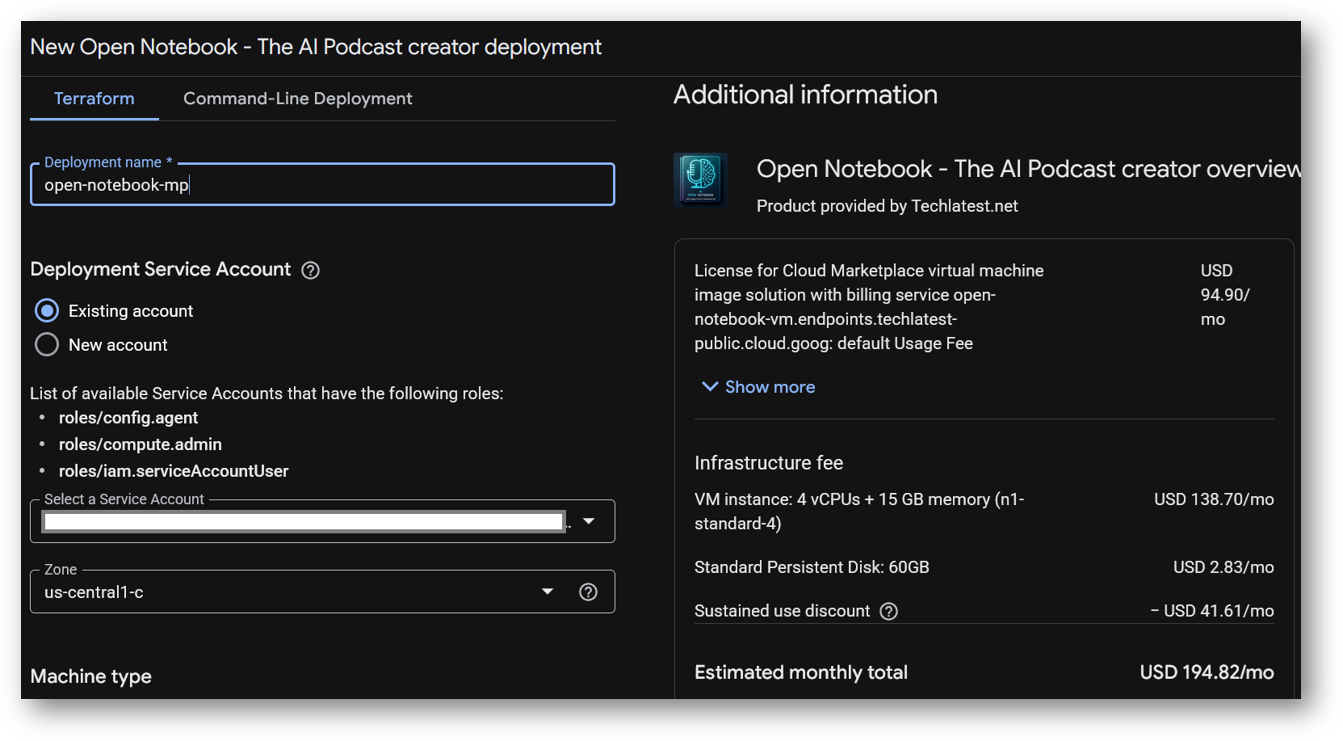
On deployment page, give a name to your deployment.
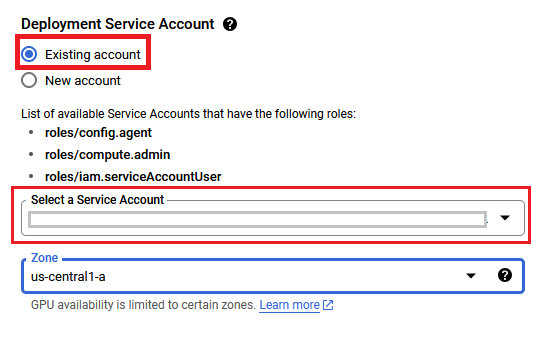
- In Deployment Service Account section, click on Existing radio button and Choose a service account from the Select a Service Account dropdown.
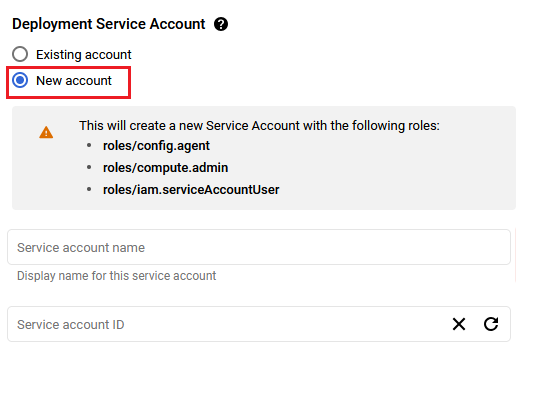
- If you don't see any service account in dropdown, then change the radio button to New Account and create the new service account here.
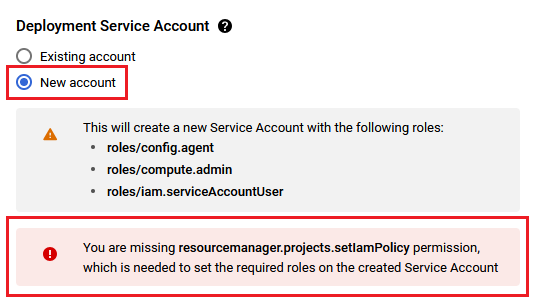
- If after selecting New Account option, you get below permission error message then please reach out to your GCP admin to create service account by following Step by step guide to create GCP Service Account and then refresh this deployment page once the service account is created, it should be available in the dropdown.
You are missing resourcemanager.projects.setIamPolicy permission, which is needed to set the required roles on the created Service Account
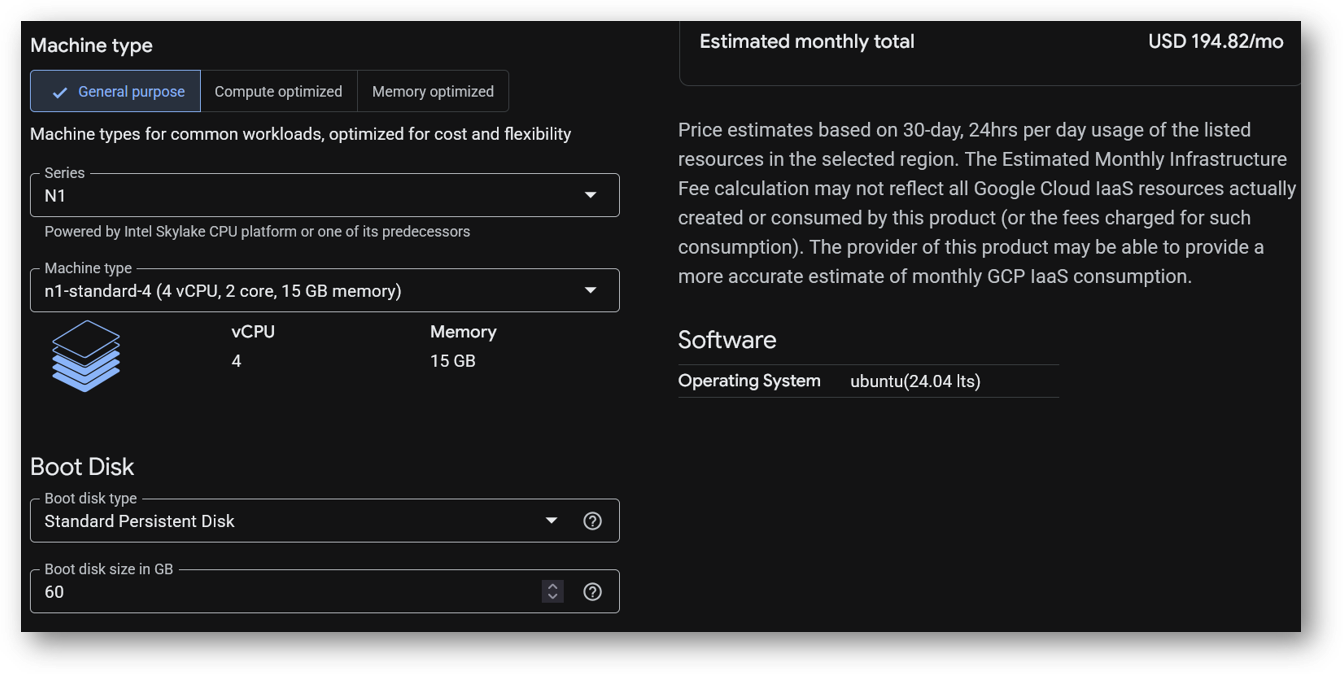
Minimum VM Specs : 15GB RAM /4vCPU
-
Optionally change the boot disk type and size. (This defaults to ‘Standard Persistent Disk’ and 50GB respectively)
-
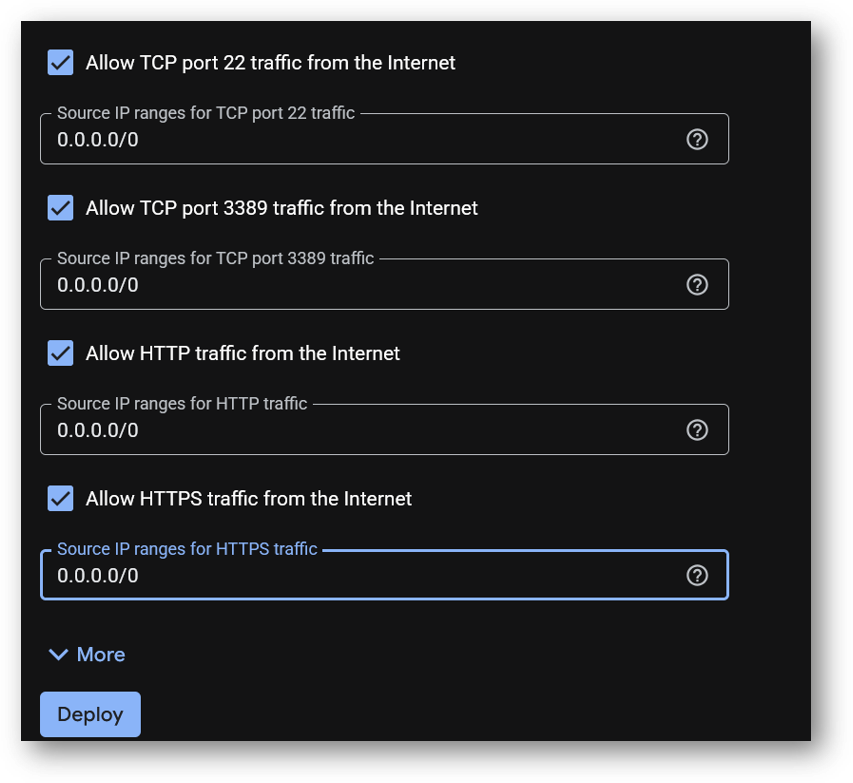
Optionally change the network name and subnetwork names. Be sure that whichever network you specify has ports 22 (for ssh), 3389 (for RDP), 80 (for HTTP) and 443 (for HTTPS) exposed.
-
Click Deploy when you are done.
-
Open Notebook - The AI Podcast creator will begin deploying.
-
A summary page displays when the compute engine is successfully deployed. Click on the Instance link to go to the instance page .
-
On the instance page, click on the “SSH” button, select “Open in browser window”.
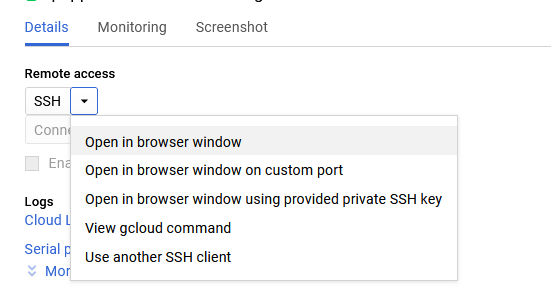
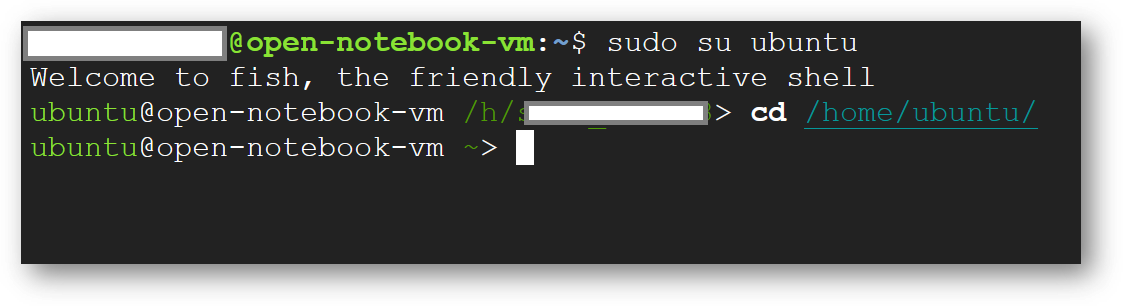
- This will open SSH window in a browser. Switch to ubuntu user and navigate to ubuntu home directory.
sudo su ubuntu
cd /home/ubuntu/
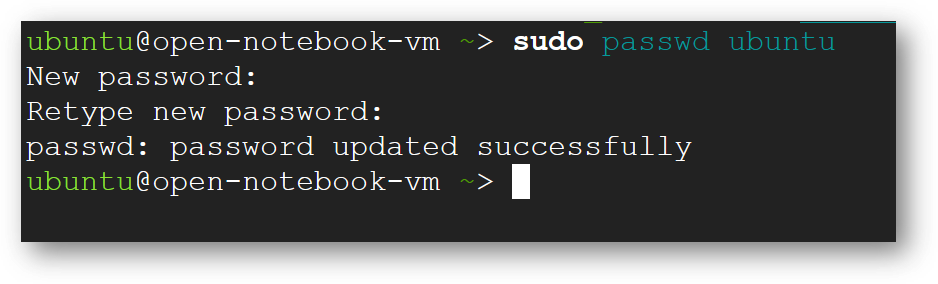
- Run below command to set the password for “ubuntu” user
-
Now the password for ubuntu user is set, you can connect to the VM’s desktop environment from any local windows machine using RDP or linux machine using Remmina.
-
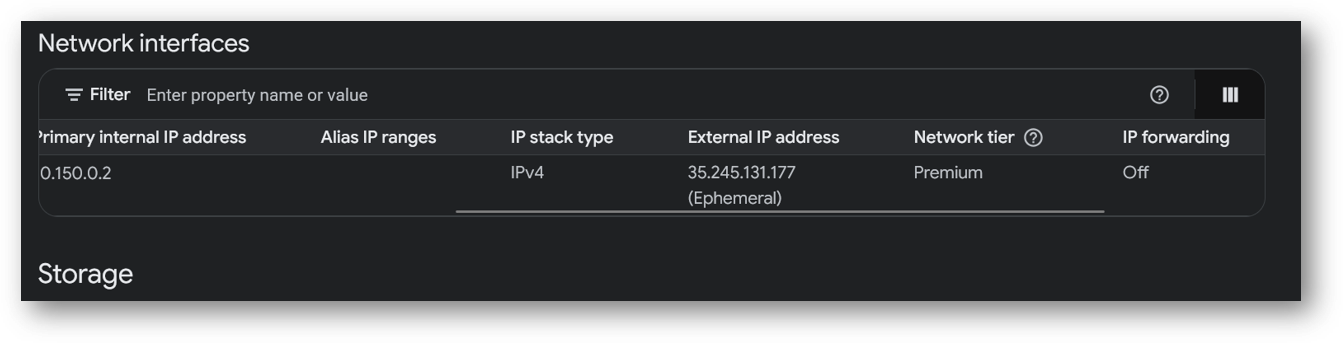
To connect using RDP via Windows machine, first note the external IP of the VM from VM details page as highlighted below
-
Then From your local windows machine, goto “start” menu, in the search box type and select “Remote desktop connection”
-
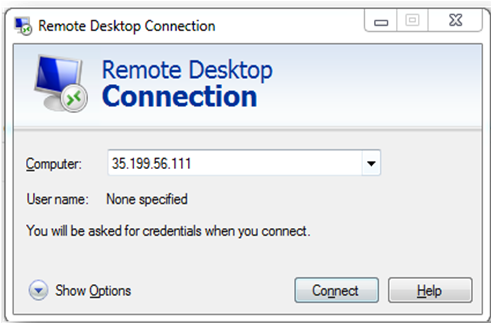
In the “Remote Desktop connection” wizard, paste the external ip and click connect
- This will connect you to the VM’s desktop environment. Provide “ubuntu” as the userid and the password set in step 6 to authenticate. Click OK
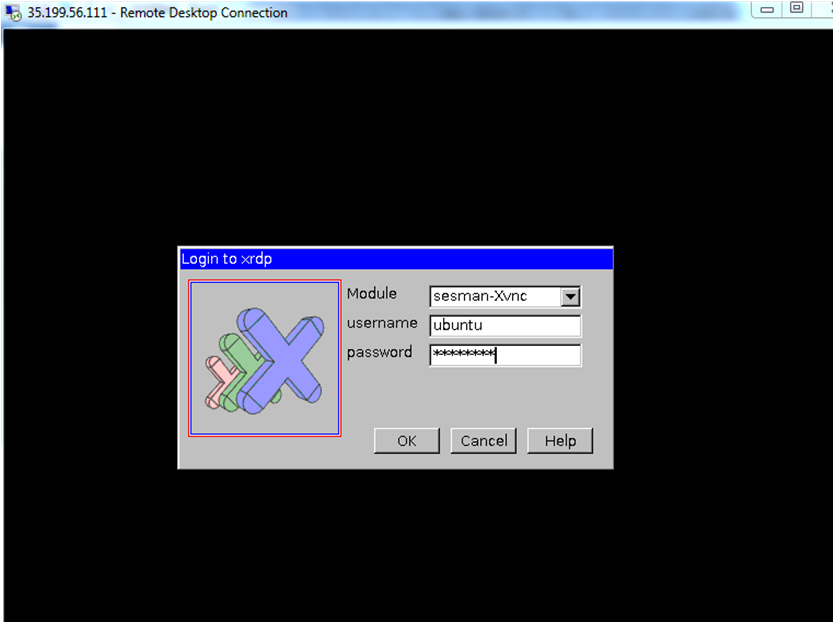
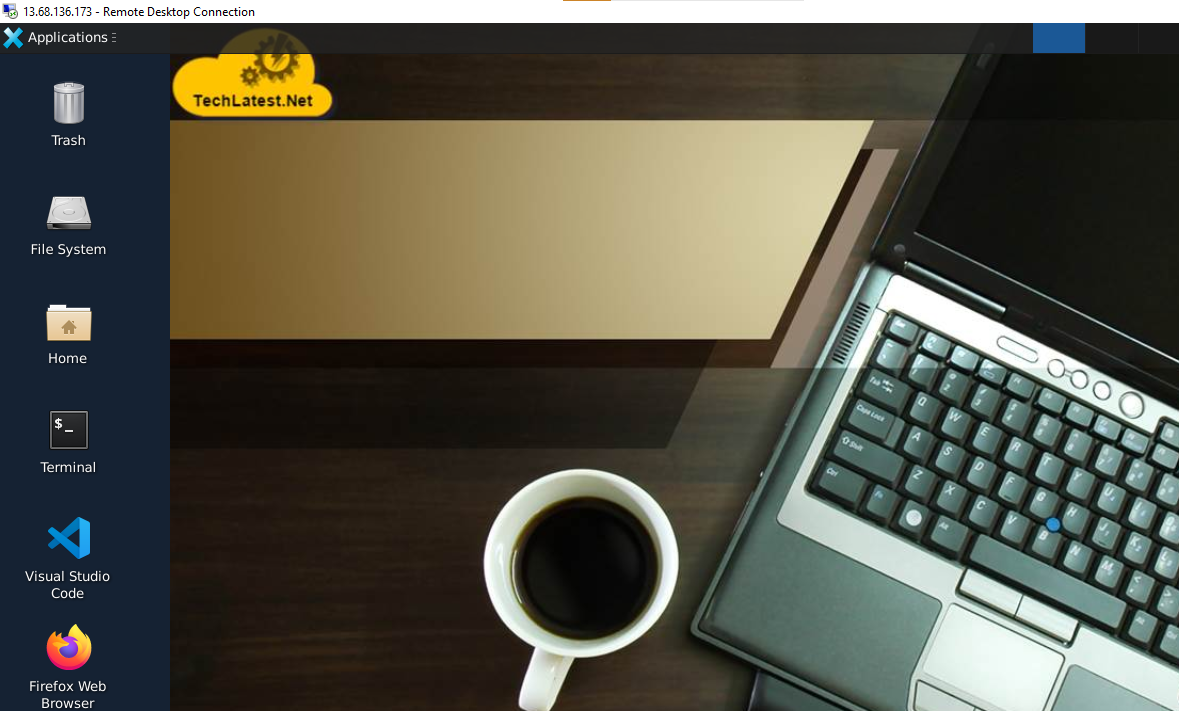
- Now you are connected to out of box Open Notebook - The AI Podcast creator VM’s desktop environment via Windows machines.
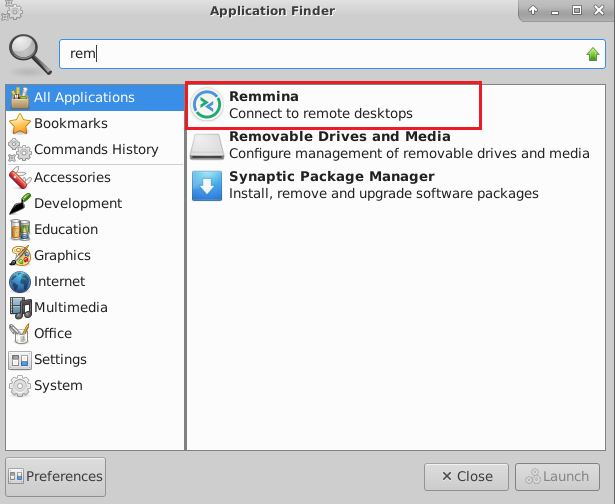
- To connect using RDP via Linux machine, first note the external IP of the VM from VM details page, then from your local Linux machine, goto menu, in the search box type and select “Remmina”.
Note: If you don’t have Remmina installed on your Linux machine, first Install Remmina as per your linux distribution.
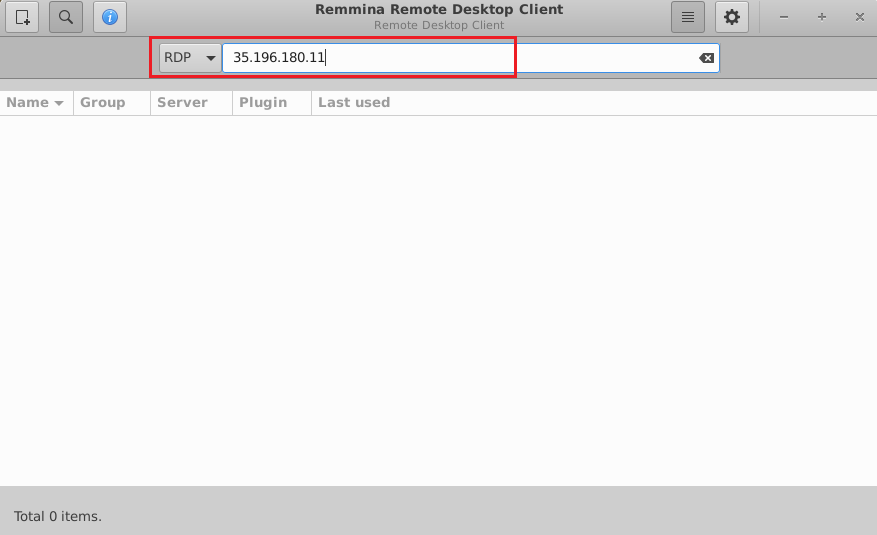
- In the “Remmina Remote Desktop Client” wizard, select the RDP option from dropdown and paste the external ip and click enter.
- This will connect you to the VM’s desktop environment. Provide “ubuntu” as the userid and the password set in step 6 to authenticate. Click OK
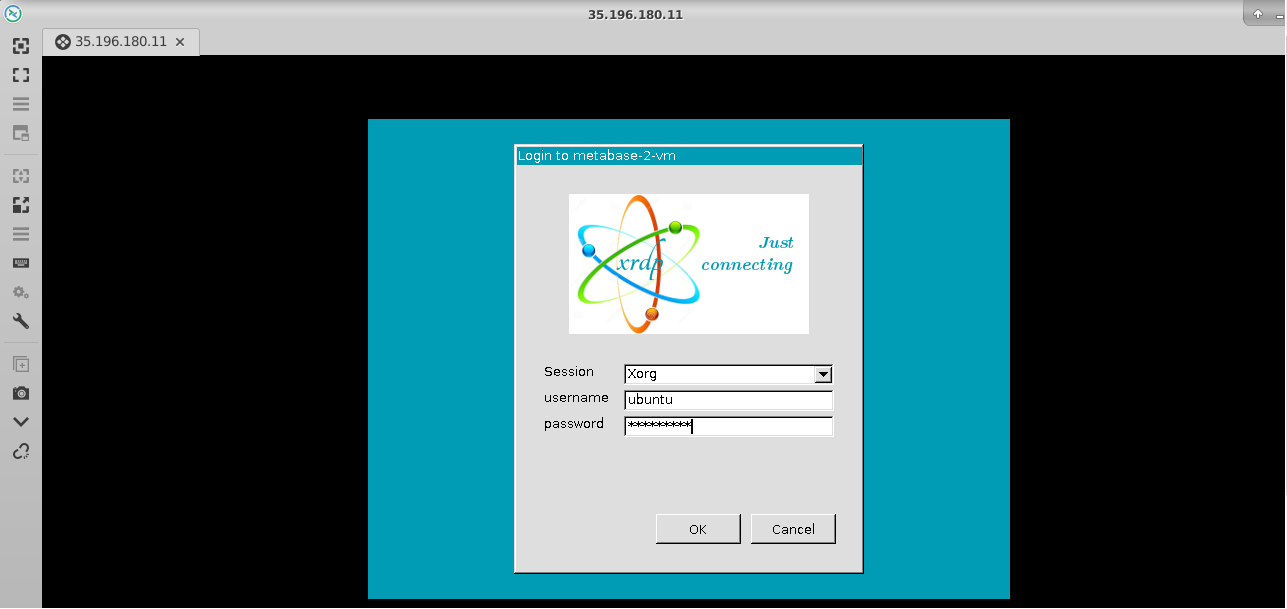
- Now you are connected to out of box Open Notebook - The AI Podcast creator VM’s desktop environment via Linux machine.
- The VM will generate a random password to login to Open Notebook Web Interface as well as an encryption key for database access. To get the password, connect via SSH terminal as shown in above steps and run below command.
cat /home/ubuntu/open-notebook-local/open_notebook_credentials.txt

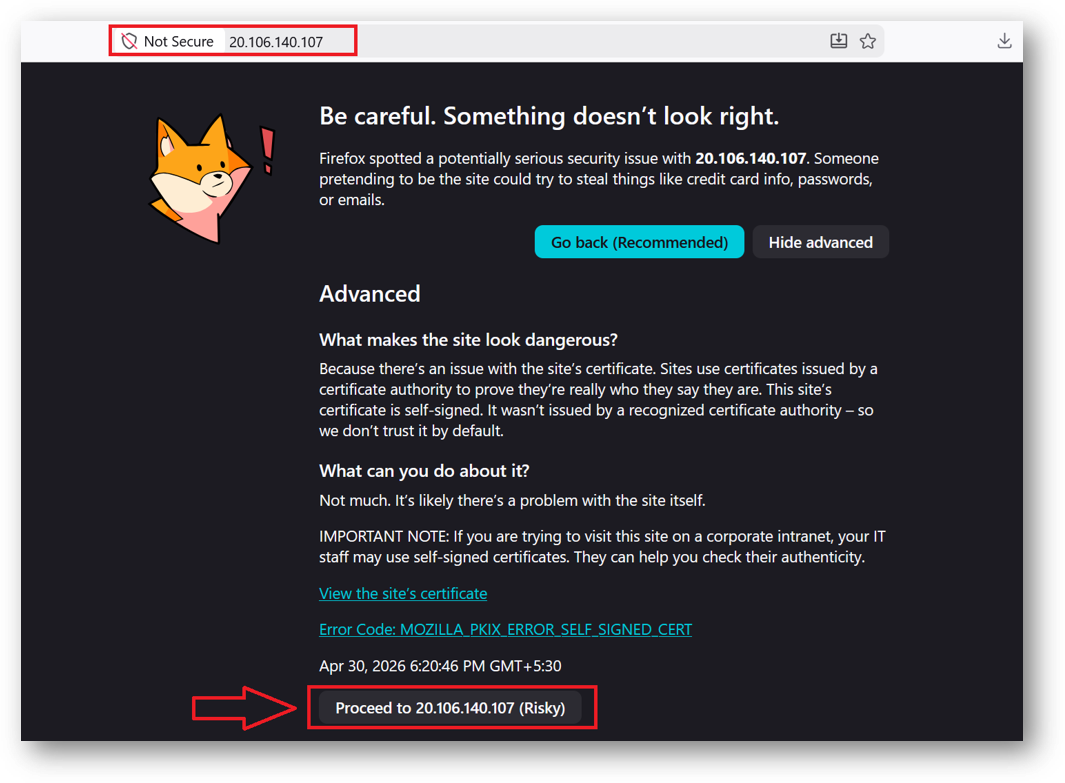
- To access the Open Notebook Web Interface, copy the public IP address of the VM and paste it in your local browser as https://public_ip_of_vm.
Browser will display an SSL certificate warning message. Expand the warning message, accept the certificate warning and Continue.
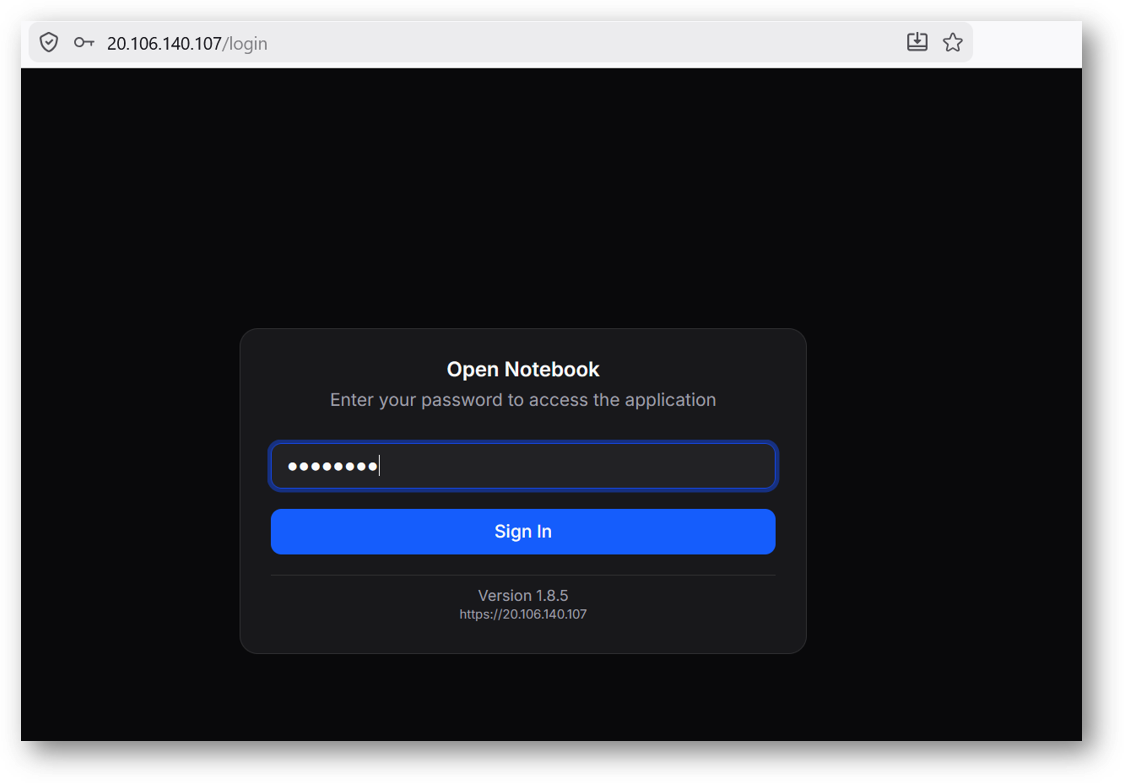
- It will open a login page. Provide the password we got at step 14 above and click Sign In.
- Now you are logged in to Open Notebook Web Interface.
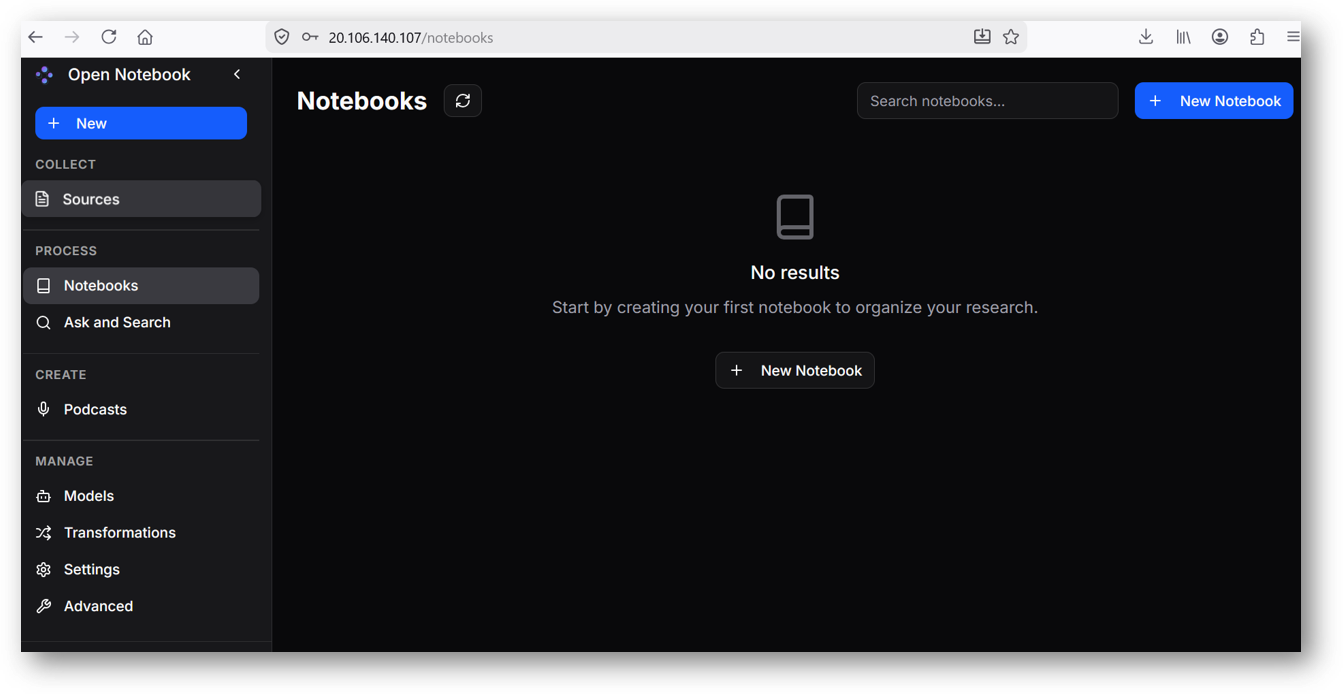
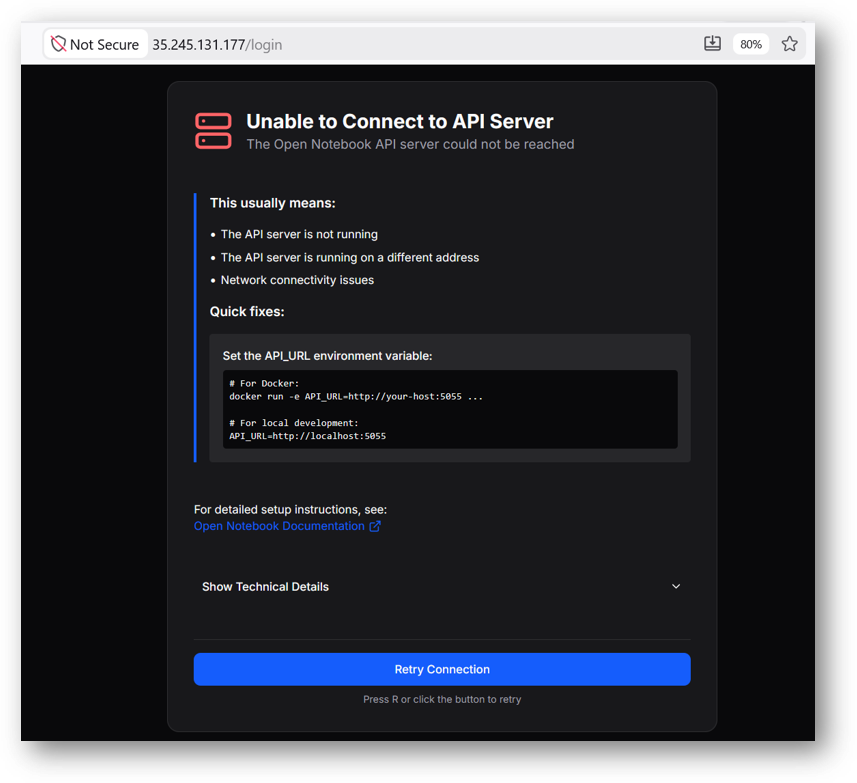
Note: If you encounter API Connection Error as shown in the below screenshot then please reboot the vm and access the Web Interface at https://public_ip_of_vm.
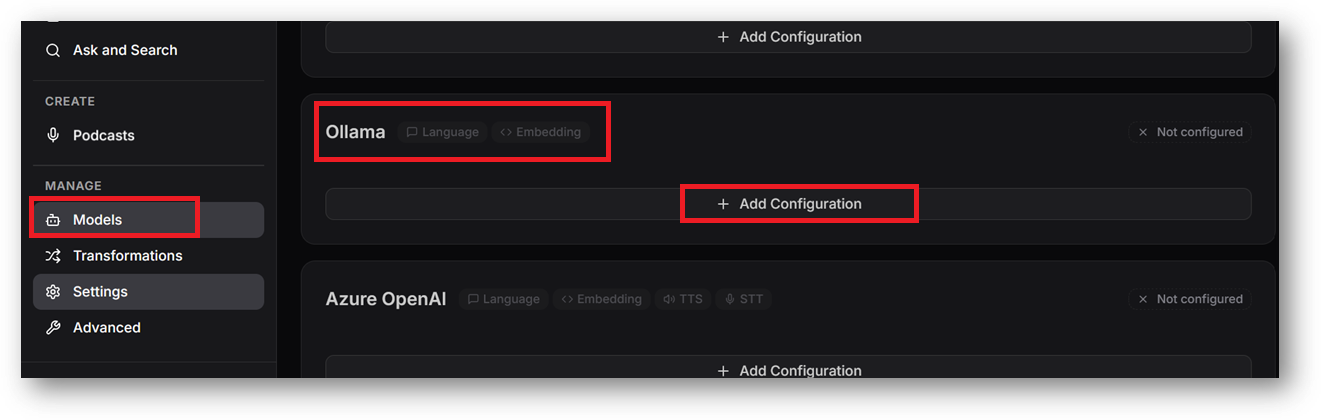
- The VM comes with “Ollama setup” and few models are already pulled for you to get started. To begin with the Open Notebook, first you need to configure the ollama models. To do so, Click on Models option from left menu and scroll down to Ollama section. Click on Add Configuration button.
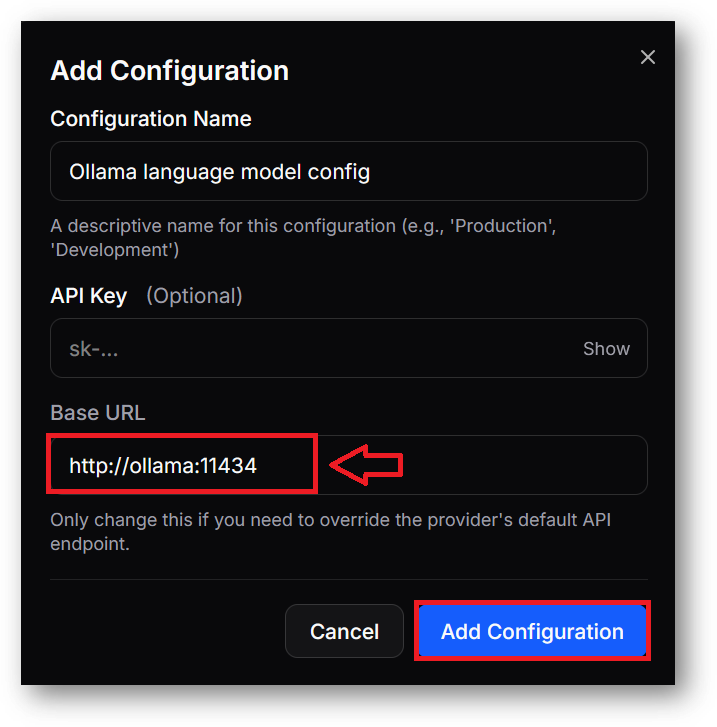
- Give a name to your configuration, leave API Key blank, for Base URL enter http://ollama:11434 . As the ollama is running in container make sure to enter Base URL as http://ollama:11434 and not http://localhost:11434.
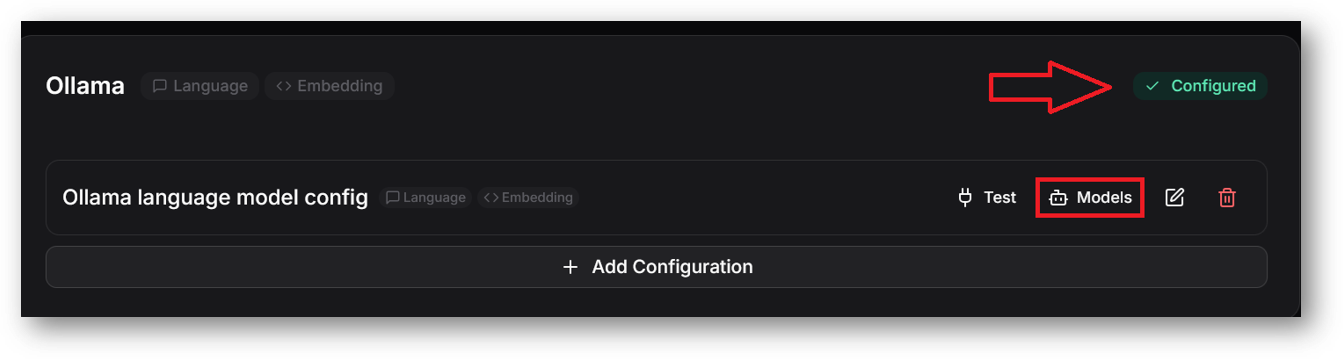
- Scroll up and you should see ollama successfully configured. Now next we need to add language and embedding models. For that click on models option as shown in the below screenshot.
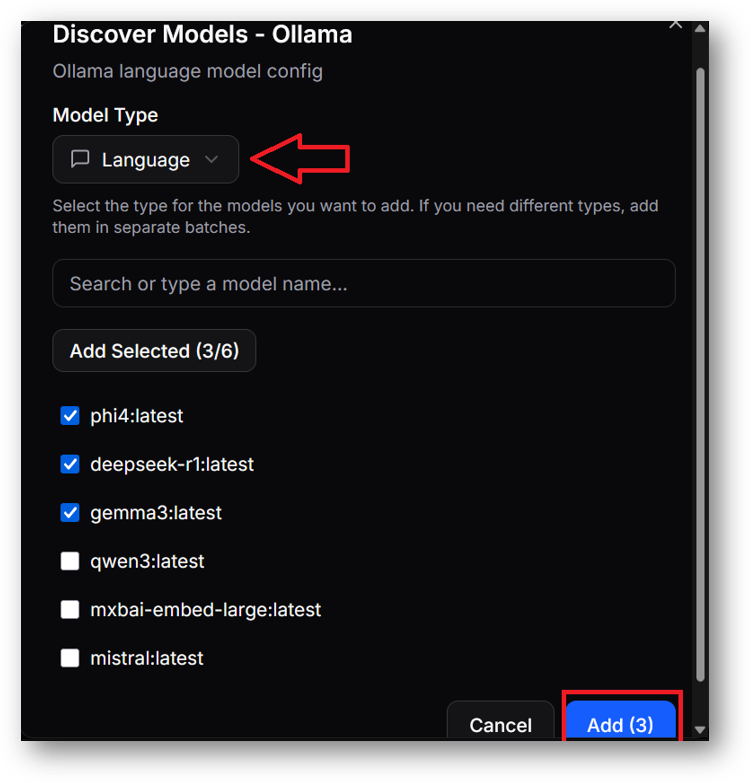
- Select Model Type as Language. By default following ollama models are already pulled on this VM. Select language model(s) from the list of available models.
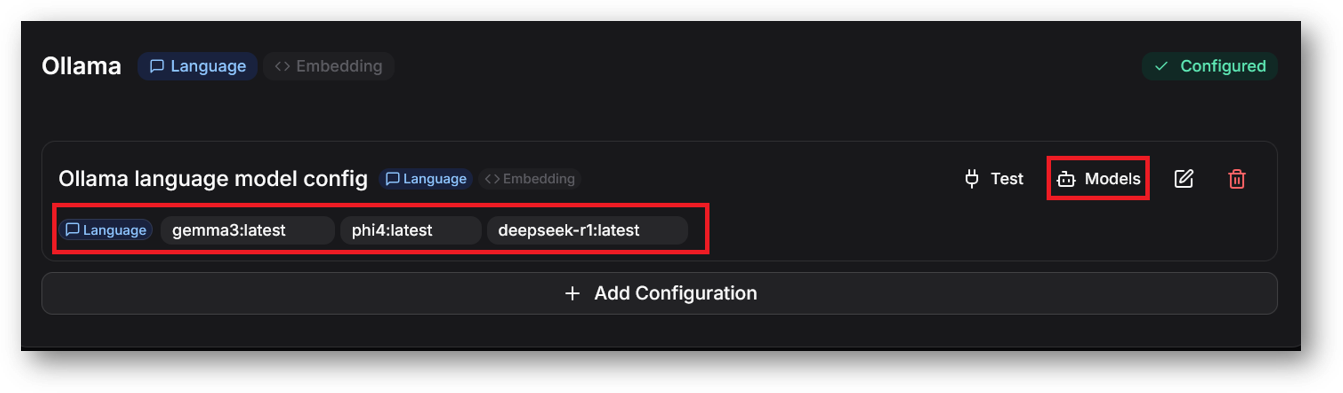
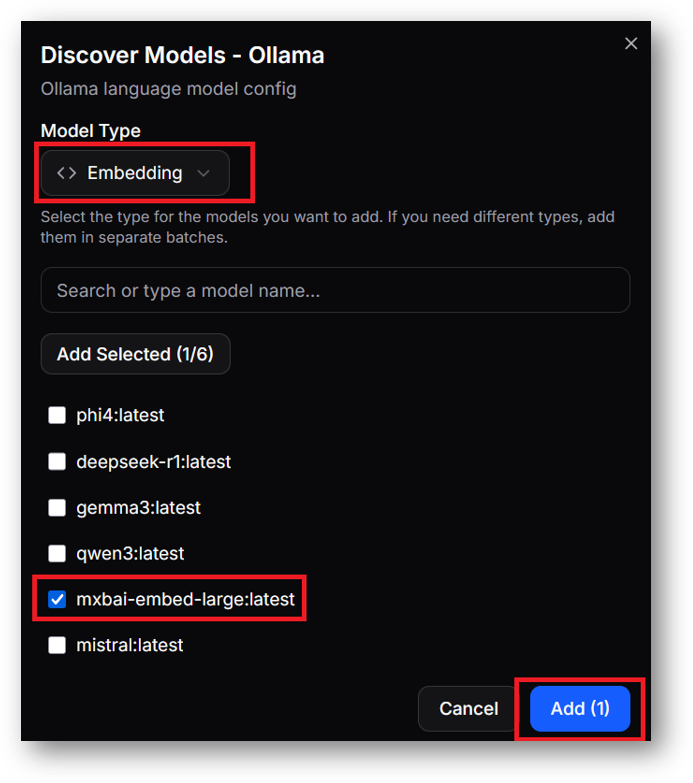
- Selected models will get added as shown below. Similarly again click on models option to add embedding models. Select Model Type as Embedding and tick mxbai-embed-large:latest from the list of available models.
Note: If you want to go with other LLM providers like OpenAI/Anthropic etc, then configure the same from this Models page.
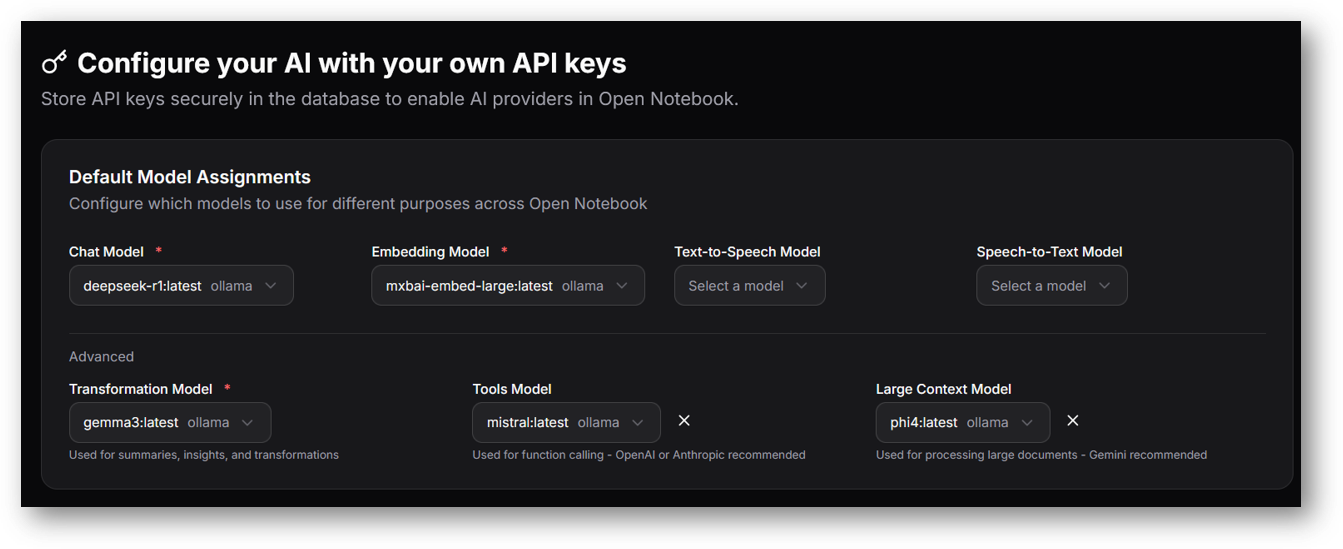
- Now we configured the ollama models, we need to set the default models. On the same Models page, scroll up to the top to Default Model Assignments section. Select various models from the dropdown.
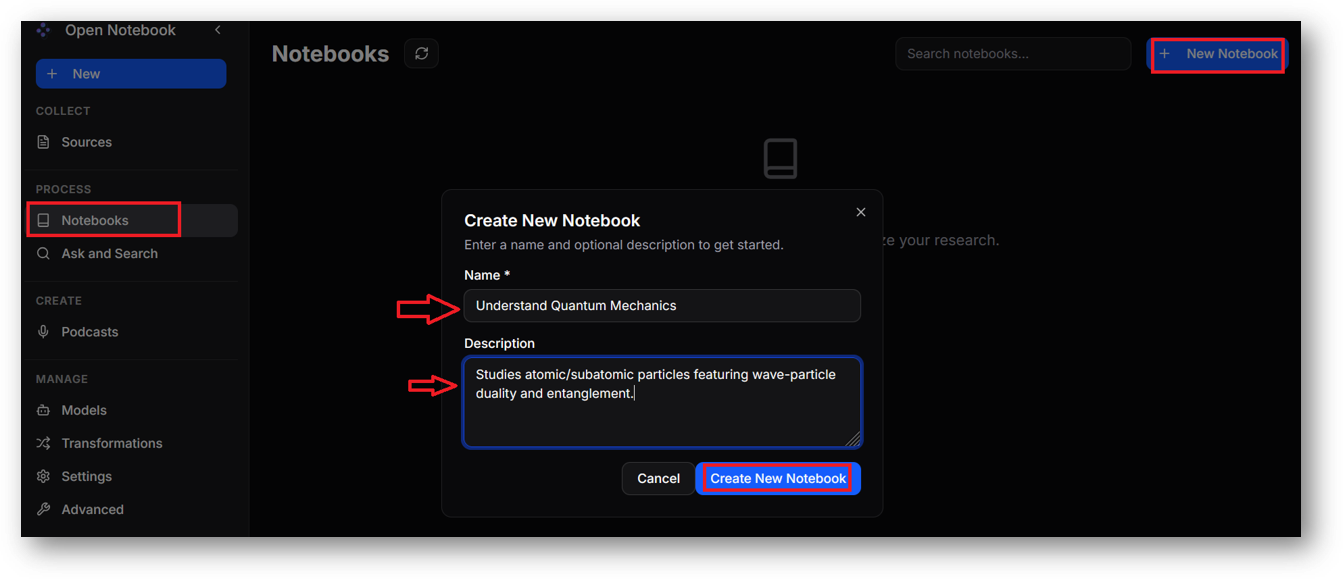
- Now you are all set to use Open Notebook. The basic workflow include, creating a new notebook with a detailed description (as detailed description helps LLM to understand the context of the notebook and provide you with better answers), add sources , gather insights from the added sources using transformations and finally talk to Assistant.
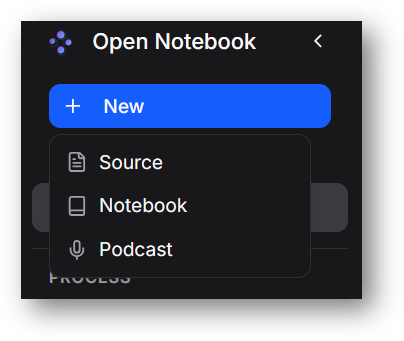
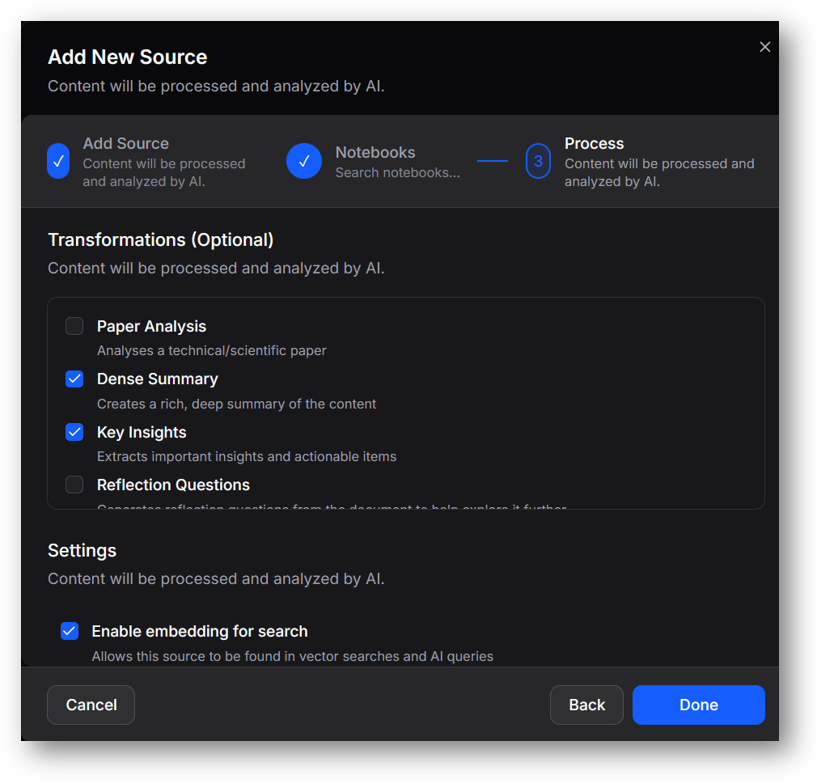
- To add the sources, click on New from left menu and select Sources option. Choose from various options.
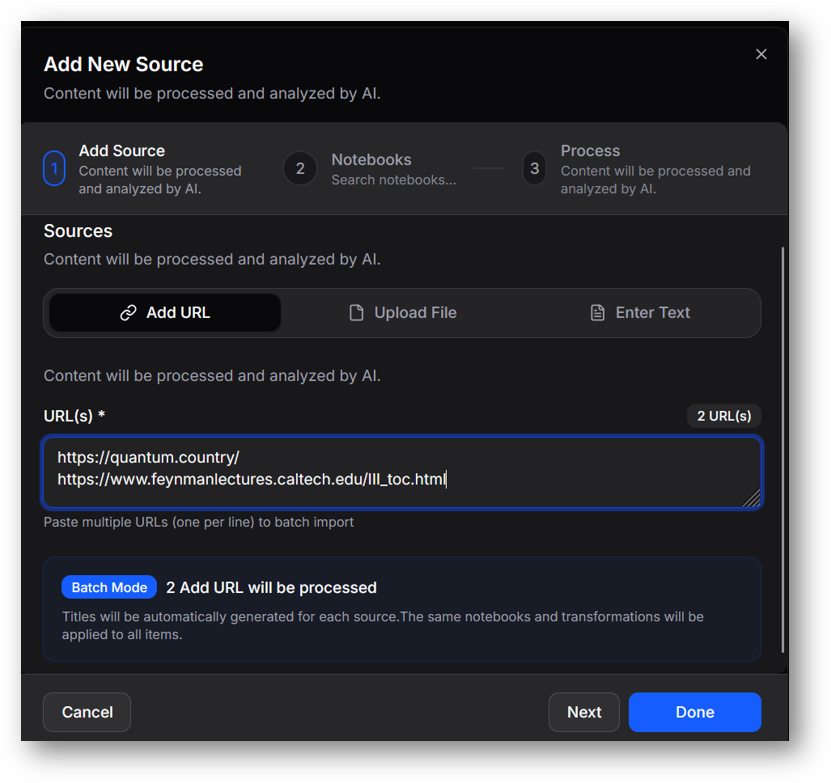
Click on Next to select the Notebook for this sources.
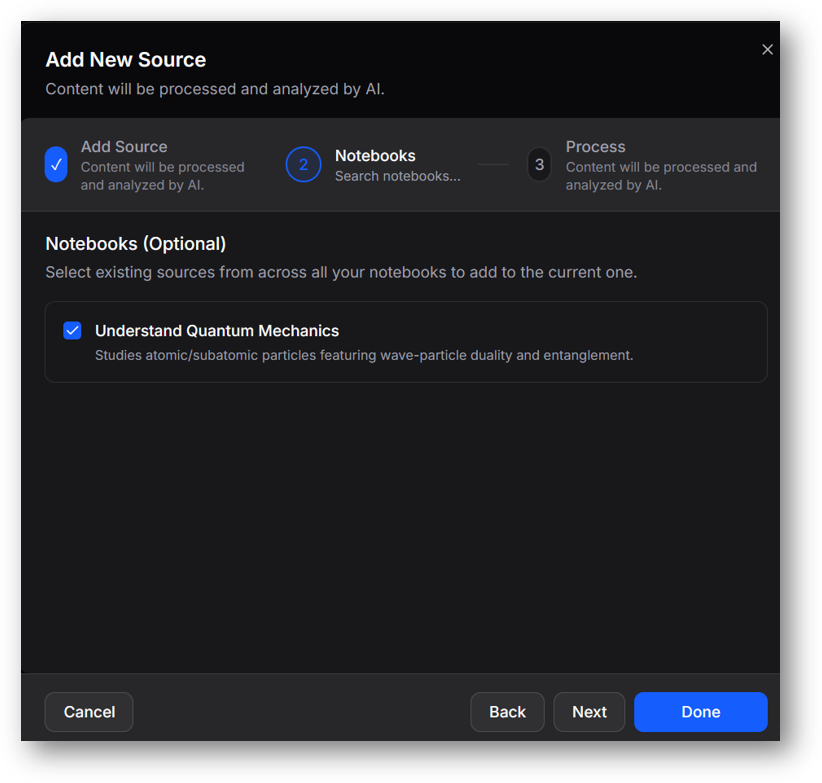
Click on Next and lastly select the Transformation option.
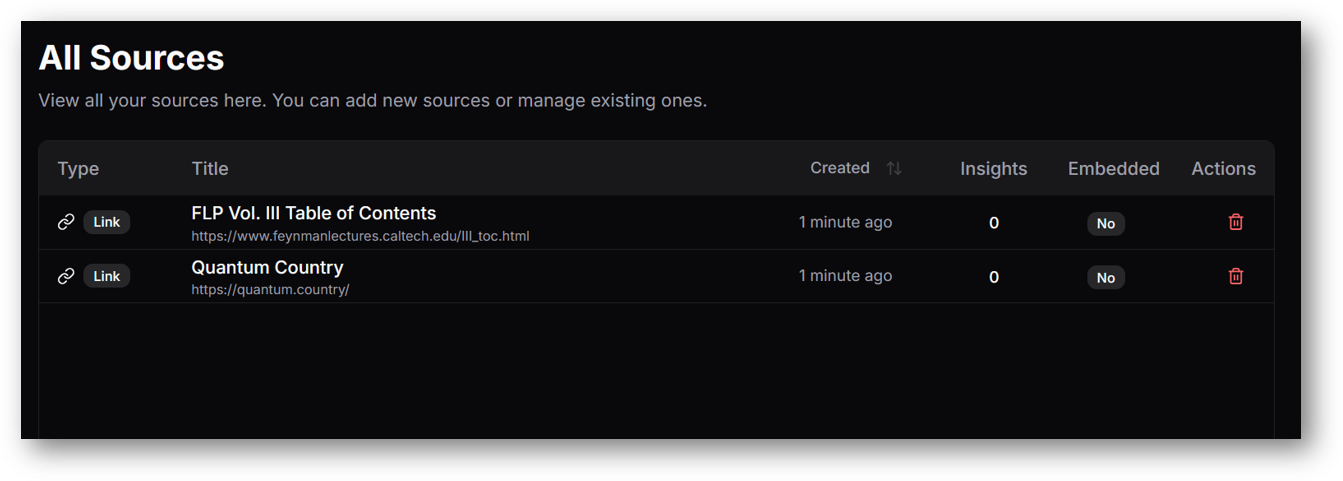
You can see the list of added sources here.
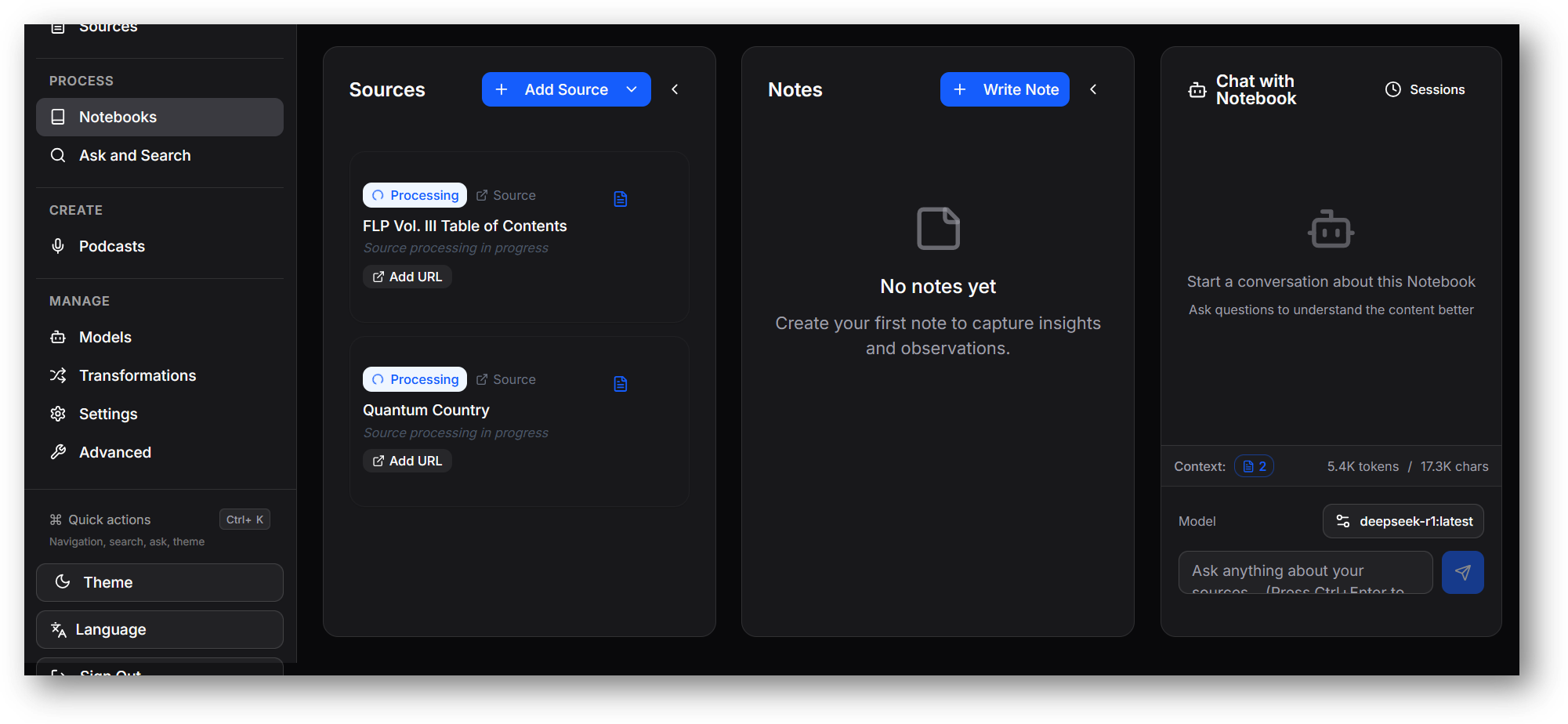
- Once your sources are ready, you can use notebook, Ask and Search and Podcast features.
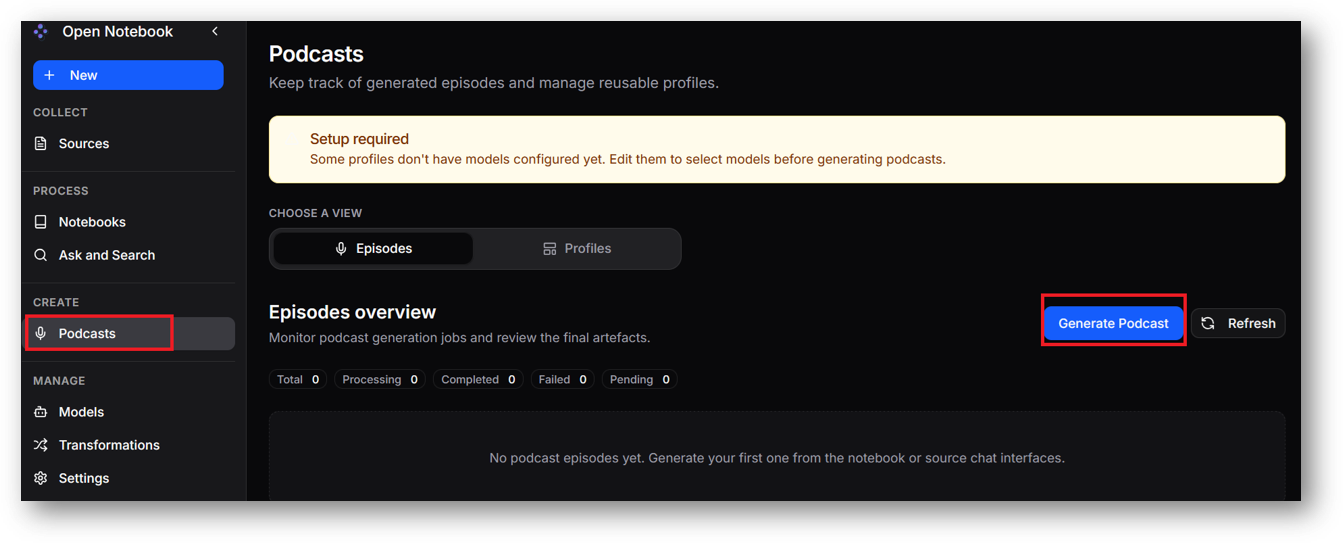
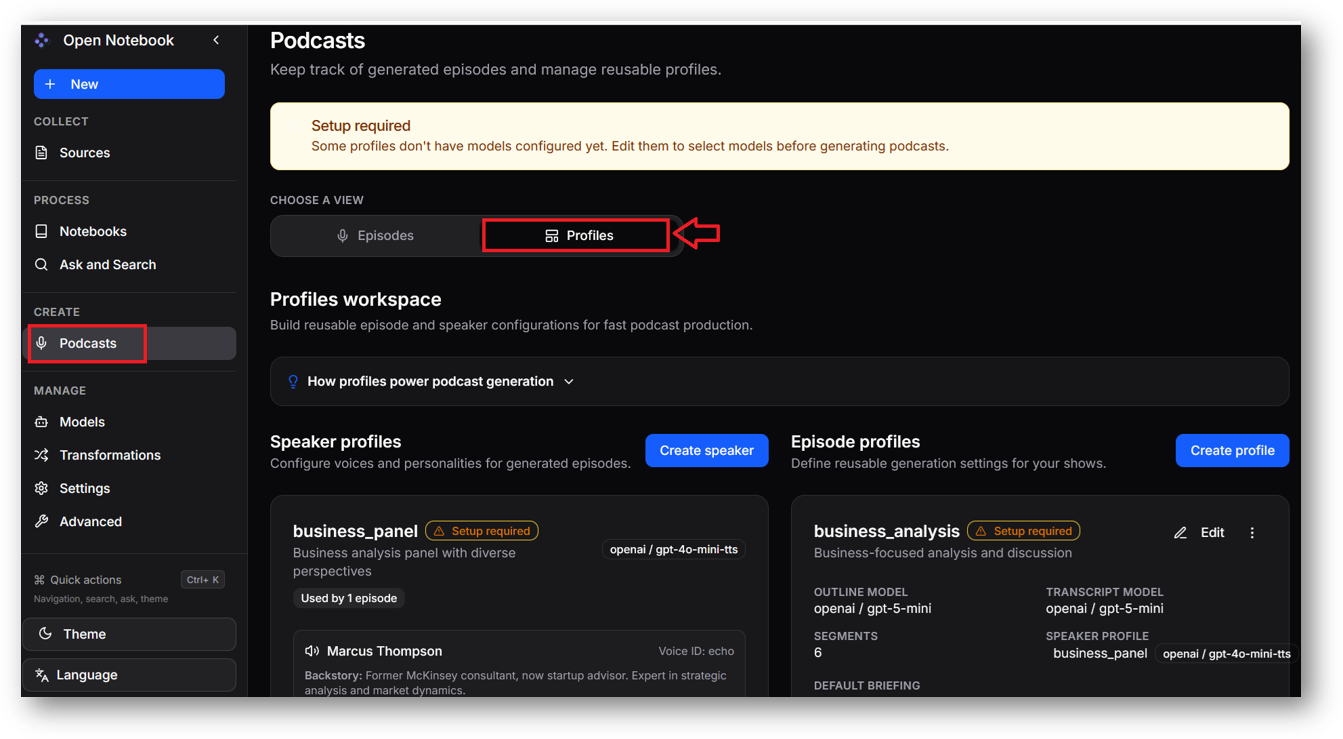
- For Podcast feature, you will need some extra configuration. you will need to update the podcast profiles and need to provide the various models including voice. Once it is ready, go to podcast tab from left pane, clik on Generate podcast and provide the details here. For more details please refer to official documentation here
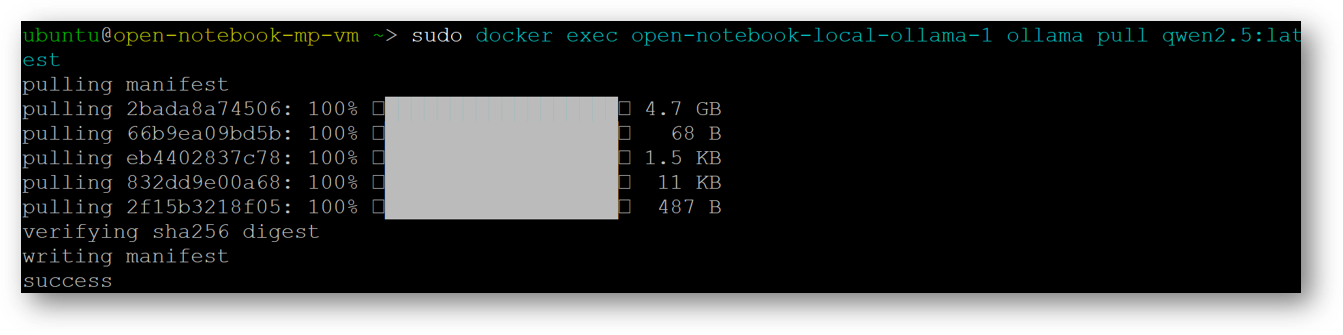
- Lastly, to pull more ollama models on this VM, connect via SSH terminal and run below command.
sudo docker exec open-notebook-local-ollama-1 ollama pull <modelname>
e.g sudo docker exec open-notebook-local-ollama-1 ollama pull qwen2.5:latest
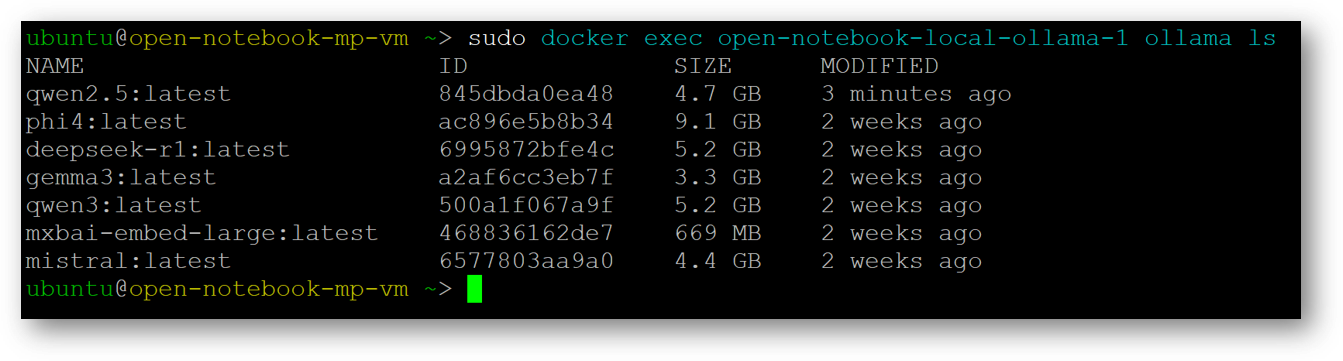
For more details, please visit Official Documentation page